
More Than Money: Why Blood Donation May Be Africa's most Overlooked Philanthropy
A single act of giving can save someone you will never meet. Every blood donation is a reminder that some of the most important acts of generosity happen quietly, without recognition, but with the power to save a life.
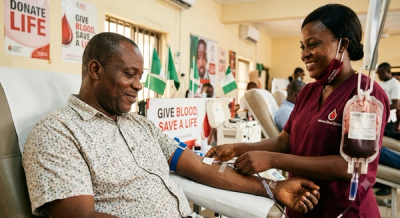
At a maternity ward in Surulere, a suburb of Nigeria’s commercial capital, Lagos, a nurse rushes down a corridor carrying a box filled with donated blood. A young mother is experiencing severe bleeding after giving birth and has minutes to live. She later does, and the blood that saves her comes from a stranger she may never meet.
This scene is not unusual across Africa, where, according to the World Health Organization (WHO), blood shortages contributed to a significant share of the roughly 182,000 maternal deaths recorded across sub-Saharan Africa in 2023. Postpartum hemorrhage remains the leading cause of maternal mortality on the continent. In Nigeria, specifically, experts estimate that the non-availability of blood is a contributing factor in up to 40 percent of all maternal deaths. However, with a wave of campaigns by governments and nonprofits across the continent, millions of volunteers now show up to donate blood each year, turning a biological necessity into an extraordinary act of everyday giving.
The Hidden Crisis
Maternal health creates significant demand for blood across the continent. Africa's rapidly growing population and high birth rates mean millions of women give birth each year, often in facilities with limited resources. It's postpartum hemorrhage, more than any other complication, that decided the outcome for the mother in Surulere.
Sickle cell disease presents a second, more constant demand. The condition affects an estimated 79 million people in Africa — 66 percent of the 120 million living with sickle cell disease worldwide — and remains a familiar reality in hospitals and families across the continent. Around 1,000 new babies are born every day across the region with a high risk of the disease, and many of these children require repeated blood transfusions during severe episodes of anemia. People in affected communities regularly encounter children in visible pain who depend on donated blood for survival and stability. That direct exposure to suffering often becomes a powerful motivation for voluntary donors, who give out of empathy and a desire to ease a burden they did not choose.
Blood is also essential for treating neonatal jaundice, caused by elevated bilirubin levels; this condition is common in the first week of life. According to the WHO regional office for Africa, jaundice occurs in about 50 percent of full-term newborns and 80 percent of premature babies. Most cases are mild, but severe, untreated cases can progress to kernicterus, a form of brain damage. Treatment sometimes requires a jaundice exchange transfusion, in which a baby's blood is gradually replaced with donated blood—timely access to safe blood can be the difference between a full recovery and permanent complications.
Other than disease, road traffic crashes create a constant demand for blood across African health systems. WHO estimates that nearly 250,000 people die on African roads each year, giving the region the world's highest road traffic death rate. Many more survive with severe injuries, often suffering traumatic blood loss that requires immediate transfusions. Unlike planned procedures, these emergencies arrive without warning, leaving hospitals dependent on whatever blood is already available. In trauma care, where minutes can mean the difference between life and death, a reliable supply of voluntarily donated blood is often the deciding factor in whether patients survive.
Blood Donation as an Overlooked Form of Philanthropy in Africa
Philanthropy is often associated with financial giving, institutional donations, and large-scale funding initiatives. In this traditional framing, wealth becomes the primary measure of generosity. However, blood donation offers a form of giving that is independent of income or social status.
Unlike financial philanthropy, eligibility for blood donation is biological rather than economic, making it one of the most inclusive forms of civic participation in healthcare systems. Blood donation is also unique because it is time-sensitive. It is required in emergencies where delays can significantly affect survival outcomes. Even when financial resources are available, access to compatible blood at the right moment is not guaranteed. This makes voluntary donors an essential part of emergency healthcare systems.
Giving elsewhere in the world tends to be formal and structured—institutions, receipts, and tax deductions. Blood donation is mostly the opposite: people donate without ever meeting, or needing to know, who receives it. Blood, unlike money, is not universally interchangeable. Different blood types mean hospitals must rely on a diverse donor base to meet specific patient needs.
Together, these realities position blood donation as a critical form of health philanthropy in Africa, where human participation becomes central to survival.
Existing Models of Blood Donation in Africa
Despite growing awareness, blood shortages remain common across many health systems in Africa. In response, community blood drives have become a key mobilization model. Religious institutions, schools, universities, and youth groups frequently organize donation campaigns that bring blood services closer to the public.
Nigeria
In Nigeria, organizations are increasingly using technology and community networks to make blood donation faster and more accessible. One notable example is the Haima Health Initiative, which connects voluntary donors to patients in urgent need through its digital donor network, round-the-clock support, and rapid response systems.
Other efforts are also helping to strengthen blood donation across the country. The National Blood Service Agency continues to promote voluntary donation through nationwide campaigns and partnerships with hospitals, universities, and community organizations. The Nigerian Red Cross Society, university teaching hospitals like the Ahmadu Bello University Teaching Hospital, faith-based groups, including the Ahmadiyya group and Christ Embassy regularly organize blood drives, especially during health campaigns and emergencies.
Kenya
Social media platforms such as WhatsApp, Facebook, and X are widely used to mobilize donors during emergencies, as evidenced by organizations like the Kenya Red Cross in Mombasa. The organization has over 2,000 followers on Instagram and regularly posts about urgent issues, including blood donation.
Also, during the Embakasi gas explosion in Nairobi in 2024, urgent blood donation appeals were widely circulated on X (Twitter) and other social media platforms by public officials and citizens. The appeals asked Kenyans to donate blood for more than 300 injured victims who were rushed to hospitals such as Mama Lucy Kibaki Hospital and Kenyatta National Hospital. The appeal spread quickly online, with people resharing the message and donors responding by going to hospitals to give blood within hours of the incident.
South Africa
In South Africa, the South African National Blood Service runs structured donation programmes through schools, companies, and community centres, supported by donor recognition systems that encourage repeat participation.
Alongside these systems, individual motivation remains important. Many people donate out of empathy, civic responsibility, or personal experience with medical emergencies. For many donors, the decision is personal. Blood donor stories report that some first gave blood after a relative survived an emergency transfusion following surgery or a road crash. Others were motivated by the chronic shortage of blood and the knowledge that a single donation can save a life.
Together, these motivations strengthen voluntary blood donation in Africa and deepen the culture of health philanthropy across the continent.
Lessons from Blood Donation in Africa
When people talk about philanthropy in Africa, they often think of large foundations such as the Aliko Dangote Foundation, the Tony Elumelu Foundation, or the Mo Ibrahim Foundation. Their work is important. But blood donation is another powerful form of giving. Every day, donated blood helps women survive childbirth, treats severe anemia, and saves people injured in accidents or other emergencies.
The mother in Surulere will probably never know whose blood saved her life. She will never know the donor's name, why they chose to give, or what they had to set aside that day to make the donation. The donor will likely never know her name either—or that their blood helped her survive.
That is what blood donation teaches us about philanthropy in Africa. You do not have to be wealthy or run a foundation to make a life-changing difference. A single act of giving can save someone you will never meet. Every blood donation is a reminder that some of the most important acts of generosity happen quietly, without recognition, but with the power to save a life.
About the Author
Maryam Idris Bappa is a writer, architect, and poet from Northern Nigeria. Her poems have appeared in the World Poetry Organization, Poetic World Africa, and 11 Seconds Magazine. Her creative nonfiction was a finalist for the UFUK Dialogue African Essay Competition, and her essays and articles have been published by African Philanthropy Network, Applied Worldwide Nigeria, The Daily Reality, and North Pad Nigeria, among others. Maryam’s work explores topics of womanhood, community, and recurring social patterns.
View all articlesRelated Narratives
We Have The Wisdom: Why Are The Systems Missing? : Turning knowledge into infrastructure across African philanthropy
For years, we have rightly celebrated and documented Africa’s rich traditions of giving, solidarity, mutual aid, and community-led resilience. But documenting this wisdom is not enough. How do we move it from story to practice, from narrative to influence? How can African traditions and ways of organizing inform the systems, policies, institutions, and practices that shape philanthropy on the continent? And, ultimately, how can they influence not only how capital is mobilized but also how power is held and distributed?
We Have The Wisdom: Why Are The Systems Missing? : Turning knowledge into infrastructure across African philanthropy
For years, we have rightly celebrated and documented Africa’s rich traditions of giving, solidarity, mutual aid, and community-led resilience. But documenting this wisdom is not enough. How do we move it from story to practice, from narrative to influence? How can African traditions and ways of organizing inform the systems, policies, institutions, and practices that shape philanthropy on the continent? And, ultimately, how can they influence not only how capital is mobilized but also how power is held and distributed?