Regulator and Partner: What Is Government’s Role in Philanthropy?
For decades, African governments have used laws to regulate philanthropy and civil society, balancing oversight with efforts to support their work. Uganda’s NGO Act, 2016, seeks to create an enabling environment for NGOs while strengthening oversight. Kenya’s Public Benefits Organizations Act, 2013, provides a framework for registration, accountability, and collaboration with the government. South Africa’s Nonprofit Organisations Act, 1997, aims to create an environment in which nonprofits can flourish. Nigeria, meanwhile, is considering the Foreign Aid (Regulation, Transparency, and Disclosure) Bill, 2026, which would tighten oversight of foreign aid and donor-funded projects.
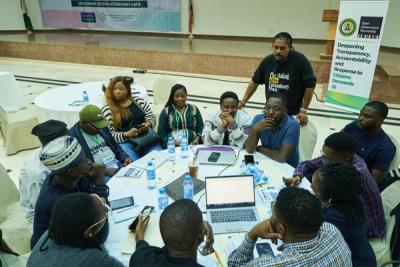
Feature Image: Civil society and government representatives participate in a breakout session at a workshop on the Open Government Partnership (OGP). Photo credit: African Centre for Leadership, Strategy & Development (Centre LSD)
When governments attempt to regulate organizations that raise and distribute money for public benefit, they usually ask where the money comes from and how it is used. They rarely ask the harder question: how to tell when government itself has overstepped.
Across the continent, defining that boundary matters more now as governments tighten oversight of civil society organizations, especially those that receive money from foreign donors.
Nigeria is the latest example. In July, lawmakers advanced the Foreign Aid (Regulation, Transparency, and Disclosure) Bill 2026 (SB. 1034), to a second reading. The bill would create a Foreign Aid Regulatory Commission with power to register, inspect, audit, sanction, and suspend organizations that receive money from abroad. Senate President Godswill Akpabio has defended the measure on national security grounds, tying it to concerns that USAID funding may have reached Boko Haram. Civil society organizations counter that the bill gives the government power to decide which foreign-funded work is allowed, mainly by requiring that funded activities fit national development priorities that the government itself defines.
Nigeria is not alone. Uganda’s NGO Act and Kenya’s Public Benefits Organizations Act both try to enable civil society while keeping watch over it. Answering the harder question starts with separating foreign aid from philanthropy, two things that keep getting lumped together.
Foreign aid is not necessarily philanthropy
Official development assistance, as the OECD defines it, is concessional funding from governments and official agencies meant to promote development abroad. Philanthropy comes from private sources including foundations, companies, communities, religious groups, and individuals, and can move within or across borders. The two sometimes fund similar work, but they answer to different structures and different people.
That distinction matters more now because private and domestic giving is already central to how many African civil society organizations are funded. A 2024 EPIC-Africa survey of 838 organizations across 46 countries found that 65% receive some form of financial support from individuals, and that individual giving ranks among their top funding sources. The 2025 Global Philanthropy Environment Index describes a similar shift, driven by middle-class donors, high-net-worth individuals, and corporate giving.
Rules built to monitor foreign government funding can serve a real purpose: transparency, preventing diversion, and protecting national security. Applied without distinction to private philanthropy and civil society, the same rules move from oversight to control. Nigeria’s new bill blurs these lines. As drafted, it covers money from foreign governments, international foundations, and private donors alike.
Where regulation is warranted
Government does have a legitimate role here. Organizations raising public money or receiving large grants should meet basic standards of financial transparency, and the government has a responsibility to guard against fraud, money laundering, and diversion of funds. A nonprofit working with children or displaced people should be held to a high standard of governance and donors need confidence.
South Africa shows what that can look like without tipping into control: registered organizations disclose their operations and finances, giving the government a mechanism for oversight without making it the arbiter of which causes they should pursue. The 2025 Global Philanthropy Environment Index suggests this is achievable at scale. Sub-Saharan Africa's score for ease of operating a philanthropic organization rose from 3.07 to 3.90 out of five between 2018 and the latest edition, alongside a similar rise in its socio-cultural environment score. Regulation and a growing sector are not incompatible.
The line gets crossed when the government stops being interested in transparency and starts dictating which causes nonprofits should pursue. Nonprofits exist precisely because they don't wait for government to decide a problem is worth solving. They investigate misconduct, defend rights, and challenge policy. Nigeria's bill sits on the wrong side of that line, critics argue. They say the proposed commission would duplicate work already done by the Corporate Affairs Commission, the tax authority, and the financial intelligence unit. Critics say the bill's rules could delay emergency aid and put human-rights defenders and vulnerable people at risk. That doesn't mean the government's worry is baseless. Foreign donations can be misused, and criminal networks do exploit charitable organizations. But the fix should match the size of the real problem, not the size of the fear.
Making giving easier
Governments could do more to create the conditions for domestic philanthropy to grow. Ghana, for example, has started treating it as a policy issue rather than an afterthought. At the 2025 Ghana Philanthropy Conference, Deputy Chief of Staff for Administration Nana Oye Bampoe Addo called domestic resource mobilization “the single most important determinant of Ghana’s fiscal sovereignty.” In the same speech, she described philanthropy as fragmented and called for aligning it with national development goals, much like the requirement critics fault in Nigeria’s bill. Whether Ghana’s eventual framework enables giving or directs it will depend on how it is written.
But partnership is not the same as dependence. Foundations can fund things governments overlook, and communities should be able to identify needs that are not captured in a nation's plans. That independence matters, even as the relationship between government and philanthropy becomes closer.
The environment for philanthropy is also becoming more difficult globally. The 2025 Global Philanthropy Environment Index found that the global average score for cross-border philanthropic flows fell from 3.58 to 3.40 between 2022 and 2025, even as the domestic environment in Sub-Saharan Africa improved. Governments have legitimate reasons to scrutinize money crossing borders. But treating foreign funding as inherently suspicious can make it harder for legitimate organizations to operate.
What Africa needs is an ecosystem in which citizens, communities, businesses, foundations, and governments each play different roles and remain accountable for their own contributions. Government does not need to stand aside, nor does it need to take control. Its role is to create the conditions for giving to flourish, protect the public interest, and know when to step back.
About the Author
Associate Editor
Ogar Monday is a journalist based in Abuja, Nigeria, with over seven years of experience telling community-based stories often overlooked by mainstream media. His work shines light on how policies, politics, and cultural practices shape the lives of ordinary people.
View all articlesRelated Narratives

Small grants, early capital: what the Tony Elumelu Foundation’s 15-year report says about funding African entrepreneurs
An African-funded grant program has backed more than 24,000 founders since 2015. Its results show where philanthropy fits in closing the small-business finance gap.

We Have The Wisdom: Why Are The Systems Missing?
For years, we have rightly celebrated and documented Africa’s rich traditions of giving, solidarity, mutual aid, and community-led resilience. But documenting this wisdom is not enough. How do we move it from story to practice, from narrative to influence? How can African traditions and ways of organizing inform the systems, policies, institutions, and practices that shape philanthropy on the continent? And, ultimately, how can they influence not only how capital is mobilized but also how power is held and distributed?