Inside a Grassroots Mission to Shape Grounded Leaders in Nigeria
The organizations doing the most meaningful work in African communities are rarely the ones with the loudest voices. In the Narrative is our response to that reality. Each month, we profile one selected organization engaging in community-driven work on the continent and make sure their stories reach the people who need to hear them.
Philanthropy Circuit
The organizations doing the most meaningful work in African communities are rarely the ones with the loudest voices. In the Narrative is our response to that reality. Each month, we profile one selected organization engaging in community-driven work on the continent and make sure their stories reach the people who need to hear them.
This edition features a Q and A interview with Chantal Muoh, Founder and Executive Director of Yielded Hearts Humanitarian Foundation (YHHF), sharing the vision behind her mission to form Africa’s next generation of value-driven leaders.
Q: What inspired the creation of your organization?
Chantal: Founded officially in 2025, Yielded Hearts Humanitarian Foundation (YHHF) grew out of a personal burden regarding the development of young people. For years, I found myself drawn to community spaces where conversations around youth, identity, guidance, and leadership were deeply needed. I realized many young people had intense potential but lacked the formative environments to help them grow.While immediate, tangible resources are important, our focus is entirely on long-term character formation. At YHHF, we often say: “We are not searching for young leaders, we are forming them.”
Q: What are the main activities or programs you run to address this challenge, and who do you reach?
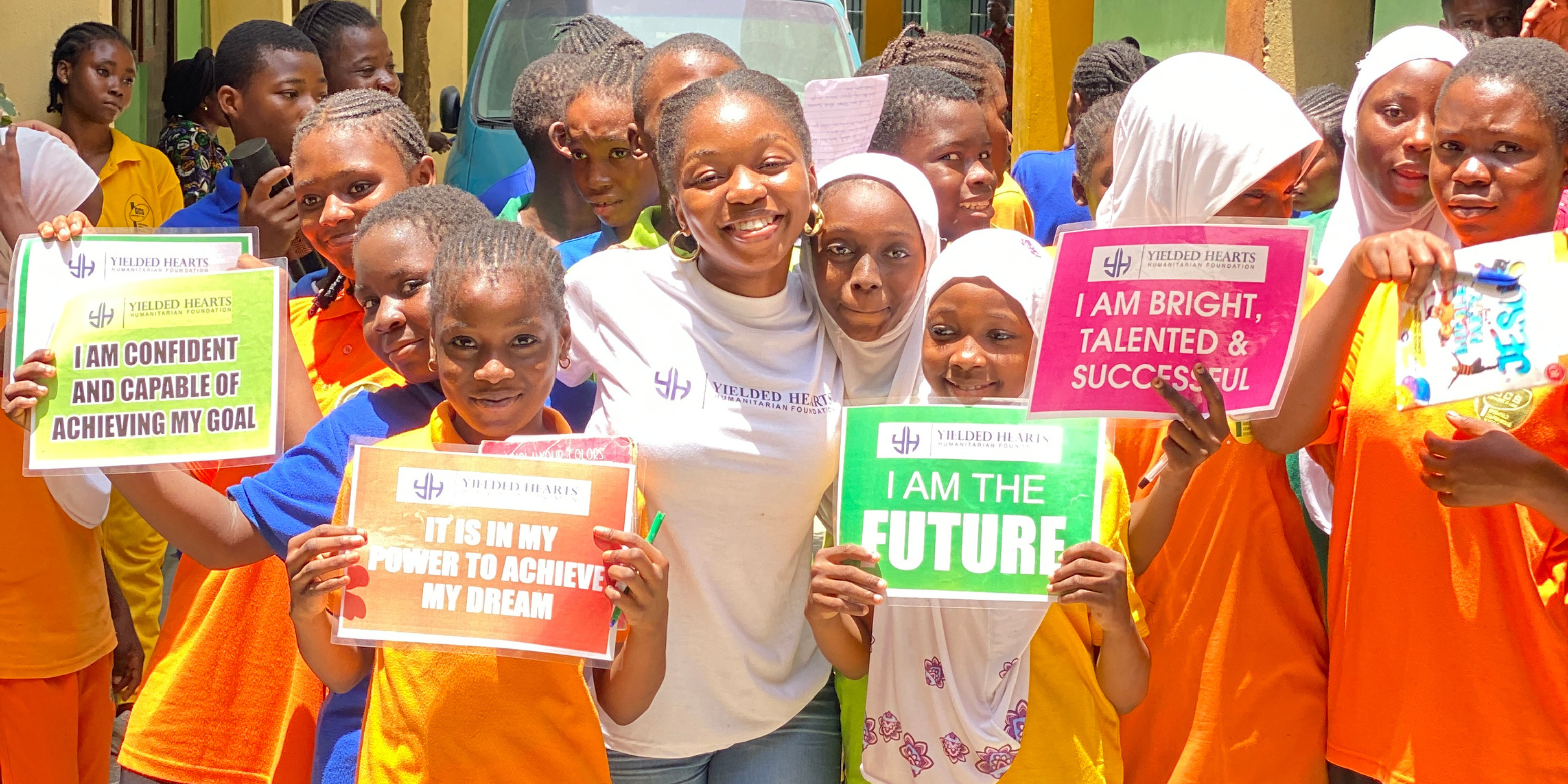
Chantal: To turn our vision into reality, we focus on building an active, continuous mentorship pipeline for children and young adults on topics relevant to leadership, advocacy, and community development. Our core initiative serves a dedicated cohort of 120 public school students across Lagos and Abuja and we maintain a deliberate mix of boys and girls, including youth living with disabilities and from displaced backgrounds. Since we began, we have engaged over 1,000 children and young adults across Nigeria.
A typical outreach day is highly immersive: we run peer-to-peer dialogues on personal growth, conduct practical safety workshops, and handle fast-paced Q&A sessions in both English and Pidgin English. Our programs are shaped directly by the raw realities, questions, and struggles these young people share with us.
Q: What has surprised you most about this work, and is there a specific moment of impact that stands out?
Chantal: What surprised me most is how deeply young people struggle with invisible barriers like low self-confidence, identity crises, and emotional pressure. Material aid and simple exposure are never enough. Real transformation only happens when youth are placed in environments where they feel actively heard, supported, and reminded that their lives carry immense value.
I remember a quiet child in our experiential learning program who initially avoided all eye contact and stayed at the back of the room. After weeks of consistent, intentional encouragement, that same child completely opened up and actively contributed to discussions. It sounds like a small moment from the outside, but it completely anchors why we do this: to help young people recognize that their voices and identities matter.
Q: Has the community pushed back on or resisted any aspect of your work? How did you handle it?
Chantal: Yes, there have been moments where certain aspects of our work were initially met with hesitation or uncertainty. In some grassroots environments where needs are urgent, people naturally tend to focus first on tangible resources or one-time assistance. While those needs are real and important, part of our work has involved helping young people, families, and communities see the value of mentorship, mindset transformation, emotional well-being, values, leadership, and personal development as long-term investments in the future of young people and society. Rather than imposing ideas, we focus on building trust, involving families and stakeholders in the conversation, and demonstrating through our work that intentional guidance, exposure, and developmental support can create meaningful and lasting transformation in the lives of young people.
Q: How do the people you serve participate in shaping your programs or decisions?
Chantal: Community participation plays a major role in shaping how we approach our work at YHHF. We do not believe in creating programs based only on assumptions or external ideas. Many of the conversations, themes, and initiatives we focus on are shaped directly by the realities, questions, struggles, and experiences we encounter through our engagement with young people, families, schools, and communities.
Our participants often share concerns around identity, confidence, pressure, emotional well-being, relationships, purpose, and the realities they are trying to navigate within their environments. Parents, teachers, and community stakeholders also provide important insight into the developmental and social challenges affecting young people today. In many ways, the communities we serve are not just recipients of our work. Their voices, experiences, and realities actively help shape the direction of it.
Q: Where do you want this organization to be in three years, and how important is local support to getting there?
Chantal: In the next three years, we hope to see Yielded Hearts grow into a stronger, more sustainable youth development organization with deeper community reach. We want to expand our “Teach, Capture, and Translate” approach, ensuring our grassroots insights inform national and global policy. A recent example of this was our individual submission to the UN's CSW70 Global Youth and Adolescent Recommendations. Confronted by the reality that many youth lack basic protections, we translated our classroom insights into three actionable mandates for global policymakers: integrating mandatory legal literacy into secondary schools, training traditional and faith leaders as community advocates, and launching youth-led "Justice Hubs" for legal and psychosocial care.
Q: What would you say to other African community leaders who feel grassroots stories are being left unheard?
Chantal: Meaningful work is not defined by visibility, but by consistency. Some of the most important transformations happen quietly in classrooms, mentorship spaces, and moments where a young person simply feels seen.
My advice is to keep building and keep serving. The work matters even before the world sees it. But to the wider ecosystem, we must realize that sustainable transformation requires local investment. African philanthropy has a vital role to play in shifting conversations away from temporary relief and toward long-term investments in leadership formation, emotional well-being, and mentorship. When we invest in our own grassroots systems, we give our young people the tools to write their stories.